E-waste
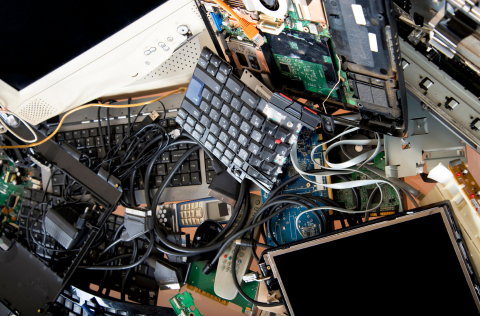
E-waste (electronic waste) is any item powered by a battery, power cord or plug. This includes items such as phones, computers, televisions, appliances and power tools.
E-waste cannot be placed in your kerbside bins or disposed of in landfill. Many electronic items contain valuable materials that can be recycled and recovered for reuse.
Victoria's landfill ban on e-waste means these items must be taken to an approved e-waste recycling facility for safe disposal and recycling.
What are some examples of e-waste?
E-waste includes:
- Large household appliances - washing machines, dishwashers, fridges, freezers, ovens and microwaves.
- Entertainment and communication devices - televisions, DVD and CD players, tablets, mobile phones and other electronic devices.
- Garden equipment - hedge trimmers, leaf blowers, chainsaws, whipper snippers and electric lawn mowers.
- Small household appliances and electronics - toasters, kettles, irons, lamps, hairdryers, fans, heaters, printers, and battery-operated or electronic toys.
Not sure if an item is e-waste? If it has a cord, plug or battery, it is generally considered e-waste and should be recycled appropriately.
Why should I recycle e-waste?
There are many reasons why you should recycle e-waste, including:
- It's good for the environment - all e-waste products can contain hazardous materials. Ranging from heavy metals like lead, mercury and cadmium to ozone-depleting chlorofluorocarbons (CFCS) and flame retardants. Even in small amounts, these dangerous chemicals can cause environmental contamination. When you multiply it by the millions of e-waste items being left in landfills, the situation becomes much more serious.
- It's good to recover and reuse - e-waste also contains a whole range of valuable materials, including tin, nickel, zinc, aluminium, copper, silver, gold and plastic. A million mobile phones contain an estimated 15–16 tonnes of copper, 340–350 kilograms of silver and 24–34 kilograms of gold. When you consider there are more than 22 million discarded mobile handsets in Australia and growing, we’re throwing away a lot of precious resources.
- Keep it out of landfill - In 2016, 44.7 million metric tonnes of e-waste was generated worldwide, but only about 20 per cent, or 8.9 million metric tonnes of this was recycled. The rest ended up in landfill. When you think about all the other rubbish that goes to landfill, keeping e-waste out is a much smarter idea.
Where can I recycle e-waste?
Council encourages residents to manage their e-waste by dropping it at our Resource Recovery Centres (RRCs) in Alexandra, Kinglake and Yea. Alternatively, you can use one of the other e-waste drop off/collection services listed on Sustainability Victoria's website.
Recycling of computers and televisions is free of charge at our RRCs as it is subsidised by the ‘National Television and Computer Recycling Scheme’. There will be a small fee of $2 per item for the disposal of other e-waste.
What happens to the e-waste collected?
Have you ever wondered... does it really get recycled? E-waste that has been collected and stored at Council's participating Resource Recovery Centres is periodically collected by our e-waste recycling contractor. It is then taken to the contractor's EPA-certified facility to be sorted into the different recycling streams.
Click on the video links below to learn what happens to your e-waste when it's correctly disposed of.
The story of a broken kettle
The story of a broken printer
The story of a broken drill